
How AI makes everyday life easier : AI is now a normal part of our daily lives. AI works silently behind the scenes to make life easier, faster, and smarter from the time we wake up until we go to bed. AI is a big part of making things easier and more productive, whether you’re using your phone’s camera, asking Google for help, finding your way through traffic, or shopping online. Here we are talking about the Benefits of AI in Daily Life , also negative facts, using clear paragraphs and helpful mini-lists to do so.
Table of Contents
1. AI as Your Personal Digital Assistant
AI-powered assistants like Siri, Alexa, and Google Assistant make everyday life easier by helping us get small things done quickly. These voice assistants can remind you of things, answer your questions, verify the weather, or even control smart home devices.
If you say “Hey Google, remind me at 7 PM,” it will save you time and duty.
AI helps with: setting up appointments and sending reminders
Controls that don’t need your hands
Quick information
AI personal assistants make life easier by cutting down on the number of things you have to do by hand.
2. AI in Smartphones: Enhancing Everyday Life
This document explores the pervasive integration of Artificial Intelligence (AI) in modern smartphones and how it significantly enhances user experience. From security features like Face ID to camera enhancements and intelligent battery management, AI is revolutionizing how we interact with our mobile devices, making everyday tasks easier and more efficient.
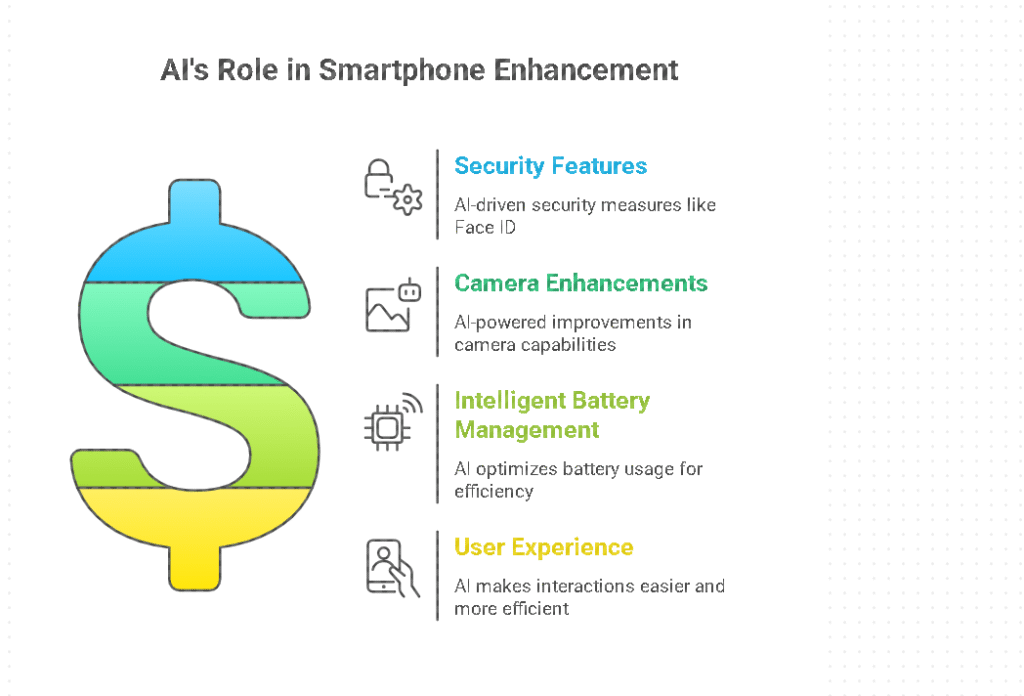
How AI Makes Your Phone Better: A Detailed Look
AI powers a multitude of features within your smartphone, enhancing its capabilities and streamlining your daily routines. Here’s a breakdown of some key areas where AI makes a significant difference:
A. Camera Features: Capturing the Perfect Moment
AI has revolutionized smartphone photography, enabling features that were once only available on professional cameras.
- Night Mode: AI algorithms analyze the scene and intelligently brighten the image while reducing noise, allowing you to capture stunning photos even in low-light conditions. It combines multiple frames, aligns them, and then uses computational photography techniques to produce a clear and well-lit image.
- Portrait Mode: AI accurately identifies the subject and blurs the background, creating a professional-looking portrait with a shallow depth of field. This is achieved through depth estimation algorithms that distinguish between the foreground and background, allowing for precise blurring.
- Color Correction: AI analyzes the colors in the scene and automatically adjusts them to create a more vibrant and realistic image. It can identify color casts and correct them, ensuring that your photos look their best.
B. Battery Management: Optimizing Power Consumption
AI plays a crucial role in extending your phone’s battery life by intelligently managing power consumption.
- Adaptive Battery: AI learns how you use your phone and adjusts power consumption accordingly. It identifies the apps you use most frequently and prioritizes their power allocation, while limiting background activity for less frequently used apps. This ensures that your battery lasts longer throughout the day.
- App Standby Buckets: AI categorizes apps into different “standby buckets” based on their usage patterns. Apps in the least frequently used bucket have their background activity severely restricted, further conserving battery power.
C. Typing Help: Seamless Communication
AI-powered typing assistance makes communication faster and more efficient.
- Predictive Text: AI analyzes your typing patterns and suggests words and phrases as you type, saving you time and effort. It learns from your previous conversations and adapts to your writing style, making its predictions increasingly accurate over time.
- Translation: AI can instantly translate text from one language to another, breaking down communication barriers. This feature is particularly useful when traveling or communicating with people who speak different languages.
- Speech-to-Text: AI converts spoken words into text, allowing you to dictate messages and documents hands-free. This is especially helpful when you’re on the go or have difficulty typing.
D. Security: Protecting Your Data
AI enhances the security of your smartphone by detecting and preventing spam and fraud which one of the must benefits of ai in daily life.
- Spam Detection: AI algorithms analyze incoming messages and calls to identify and filter out spam. They look for patterns and characteristics that are common in spam messages, such as suspicious links or unsolicited offers.
- Fraud Detection: AI can detect fraudulent activity by analyzing your phone usage patterns and identifying anomalies. For example, it can flag suspicious transactions or unauthorized access attempts.
The Impact of AI on Smartphone Usage
Smartphones with AI have transformed the way we communicate, capture memories, and manage our daily lives. They make it easier to talk to people, take better pictures, and do everyday tasks. The integration of AI has not only enhanced the functionality of smartphones but has also made them more intuitive and user-friendly.
Conclusion
AI has become an indispensable component of modern smartphones, enhancing various aspects of the user experience. From improving camera performance to optimizing battery life and enhancing security, AI is constantly working behind the scenes to make our lives easier and more connected. As AI technology continues to evolve, we can expect even more innovative and transformative applications in the future of smartphones.
3. AI in Social Media and Communication
AI is used by social media sites to make your experience more personal. AI chooses the videos, photos, and posts on YouTube, TikTok, and Instagram that you will like the most every time you open them.
Benefits of ai in daily life : with social media
AI makes communication better by:
Suggesting videos and posts
Filtering out bad or inappropriate content
Chatbots can help customer service
Making photos and videos seems better
This personalization makes it easy for people to find useful content and stay interested.
⭐ 4. AI in the Transportation Industry
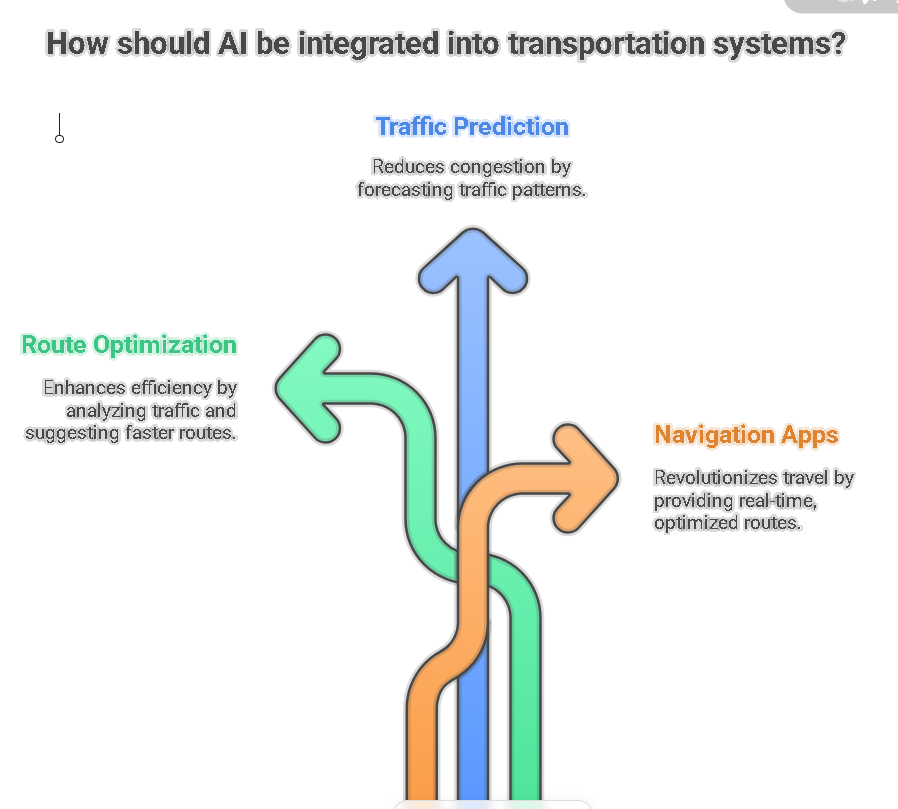
This document explores the transformative role of Artificial Intelligence (AI) in the transportation industry. It highlights how AI-powered applications, such as navigation apps like Google Maps, are revolutionizing travel by optimizing routes and enhancing efficiency. The document delves into the specific ways AI is being utilized to analyze traffic patterns, predict congestion, and provide users with the fastest and most convenient routes to their destinations.
Traffic Analysis and Prediction:
AI algorithms are capable of processing vast amounts of data from various sources, including GPS data from smartphones, traffic sensors, and cameras. By analyzing this data, AI can identify traffic congestion, accidents, and other incidents that may impact travel times. Furthermore, AI can predict future traffic conditions based on historical data and current trends, allowing users to plan their journeys accordingly.
Route Optimization:
Based on the analysis of traffic data, AI algorithms can optimize routes in real-time. This involves identifying alternative routes that avoid congested areas and minimize travel time. AI can also consider factors such as road closures, construction zones, and weather conditions to provide users with the most accurate and up-to-date route information.
Benefits of AI in daily life (Transportation:)
The integration of AI into transportation has numerous benefits for both individuals and businesses:
- Reduced Travel Time: By optimizing routes and avoiding traffic congestion, AI can significantly reduce travel time, allowing people to reach their destinations faster.
- Improved Efficiency: AI-powered transportation systems can improve the overall efficiency of transportation networks by reducing congestion and optimizing traffic flow.
- Enhanced Safety: AI can help to improve road safety by identifying potential hazards and providing drivers with timely warnings.
- Cost Savings: By reducing travel time and fuel consumption, AI can help individuals and businesses save money on transportation costs.
- Environmental Benefits: AI can contribute to environmental sustainability by reducing traffic congestion and optimizing fuel efficiency, which can lead to lower emissions.
Examples of AI Applications in Transportation:
Beyond navigation apps, AI is being used in a variety of other transportation applications:
- Self-Driving Cars: AI is the core technology behind self-driving cars, which have the potential to revolutionize transportation by making it safer, more efficient, and more accessible.
- Smart Traffic Management Systems: AI is being used to develop smart traffic management systems that can optimize traffic flow in real-time by adjusting traffic signals and providing drivers with information about traffic conditions.
- Predictive Maintenance: AI can be used to predict when vehicles or infrastructure components are likely to fail, allowing for proactive maintenance and preventing costly breakdowns.
- Logistics and Supply Chain Optimization: AI can be used to optimize logistics and supply chain operations by predicting demand, optimizing routes, and managing inventory.
- Public Transportation Optimization: AI can be used to optimize public transportation systems by predicting demand, optimizing routes, and improving scheduling.
Challenges and Considerations:
While AI offers significant potential for transforming the transportation industry, there are also some challenges and considerations that need to be addressed:
- Data Privacy and Security: The use of AI in transportation requires the collection and analysis of vast amounts of data, which raises concerns about data privacy and security.
- Bias and Fairness: AI algorithms can be biased if they are trained on biased data, which can lead to unfair or discriminatory outcomes.
- Job Displacement: The automation of transportation tasks through AI could lead to job displacement for some workers.
- Ethical Considerations: The use of AI in transportation raises ethical considerations, such as the responsibility for accidents involving self-driving cars.
- Regulation and Governance: Clear regulations and governance frameworks are needed to ensure that AI is used responsibly and ethically in the transportation industry.
Conclusion:
AI is transforming the transportation industry in profound ways, making travel easier, more efficient, and safer. From navigation apps that optimize routes to self-driving cars that promise to revolutionize personal mobility, AI is driving innovation across the transportation sector. While there are challenges and considerations that need to be addressed, the potential benefits of AI in transportation are enormous. As AI technology continues to evolve, it is likely to play an increasingly important role in shaping the future of transportation.
Benefits of ai in daily life, that happen every day include:
Updates on traffic in real time
Smart route ideas
Correct ride-sharing matches
Lane assist and automatic braking are examples of advanced car safety features.
AI makes roads safer as well as more comfortable.
⭐ 5. AI in Online Shopping and E-Commerce
How AI helps everyday life makes your online shopping experience better, whether you’re buying clothes, electronics, or groceries.
AI helps people who are shopping by:
Suggesting things to buy based on what you like
Showing the right delivery times
Giving chatbot support right away
Finding fake or low-quality goods
AI speeds up, makes online shopping safer, and tailors it to each people
6. AI in the home and lifestyle
AI is turning homes into smart places to live. People use smart devices now to save time, energy, and work.
AI at home includes:
Smart lights and air conditioning
Cameras with AI security
Systems for automating homes
Robots that clean your floors
Fitness apps that use AI
These tools make homes safer, use less energy, and feel better.
7. AI in Money and Finance
AI now keeps our money safe and helps us use it better. AI is used by banking apps to make transactions safe, and finance apps give you helpful information.
For example:
Finding and warning about fraud
Good tips for budgeting
Automated reminders for bills
Investment tools that use AI
AI makes financial tasks simpler and more dependable.
8. AI in the Classroom
AI tools have made education more adaptable. Apps that offer personalized lessons let students learn at their own pace.
AI in education:
AI tutors that make hard topics easy to understand
Apps for learning languages
Personalized study suggestions
Tools to help with homework
AI helps students, teachers, and people who learn on their own equally.
9. AI in Health Care
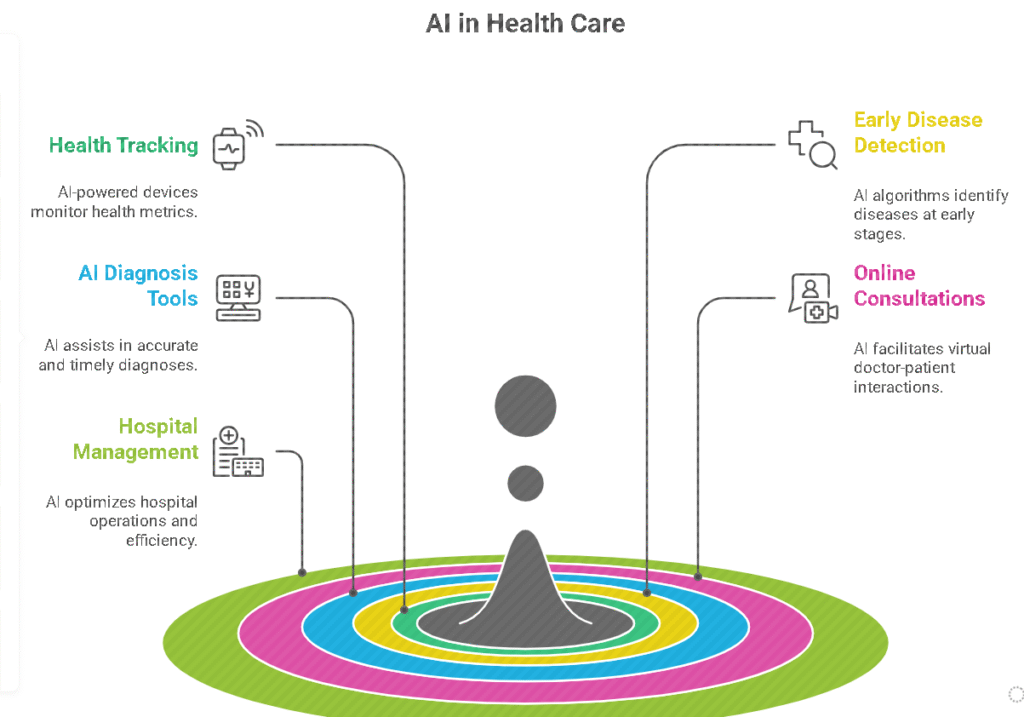
AI is very important for making health and medical care better. AI lets people keep an eye on their health with things like fitness watches and virtual check-ups.
Some of the benefits are:
Health tracking on a smartwatch
Finding diseases early
Tools for AI diagnosis
Consultations with a doctor online
Help with managing the hospital
AI makes healthcare services faster and more accurate.
⭐ 10. AI helps you finish more work
AI helps workers, students, freelancers, and business owners save time by doing tasks that need to be done again and again.( Benefits of AI in Daily life)
For example, sorting emails automatically
AI tools for writing and editing
Making things automatic
Things to make things
Businesses can use chatbots to get help with
AI helps people get more done, which lets them focus on the things that are most important.
11. AI in Real Life Every Day
You probably use AI a lot every day, even if you don’t know it:
Open with your face
Netflix and YouTube ideas
Warnings about scams that happen when you bank online
Smart home devices
Apps for keyboards that come up with ideas on their own
AI is abeing a crucial part of life now.
12. Problems with AI (Short and Fair)
There are a lot of benefits of AI in daily life , but there are also some bad things, like privacy concerns, the need for careful regulation, and the fact that people rely too much on technology. But AI can still be a useful tool for everyone if the right rules are in place.
⭐ The End
AI is changing everyday life in many ways, from smart homes and smartphones to banking and healthcare. It saves time, makes things easier, generate things safer, and increases productivity. AI isn’t here to take over for people; it’s here to help us. As AI gets better, everyone will need to learn how to use AI tools to stay ahead in a smart world.
